When people first hear the term ring saw, they often assume it is just another type of circular cutting tool. In reality, a ring saw is a more specialized machine designed for jobs where standard handheld saws may not provide enough cutting depth or enough flexibility in tight working areas. It is commonly used in concrete, brick, block, and masonry work, especially when contractors need to make deep cuts in walls, floors, pipes, or structural openings.
For construction professionals, renovation crews, and demolition teams, understanding how a ring saw works is important because the tool solves a very specific problem. It offers deeper cutting capacity than many traditional handheld saws while still remaining relatively compact and portable. That combination makes it valuable for demanding jobsite conditions where access is limited but performance still matters. In this guide, you will learn what a ring saw is, how it works, where it is used, what its strengths and limits are, and how to choose the right setup for your project.
What Is a Ring Saw?
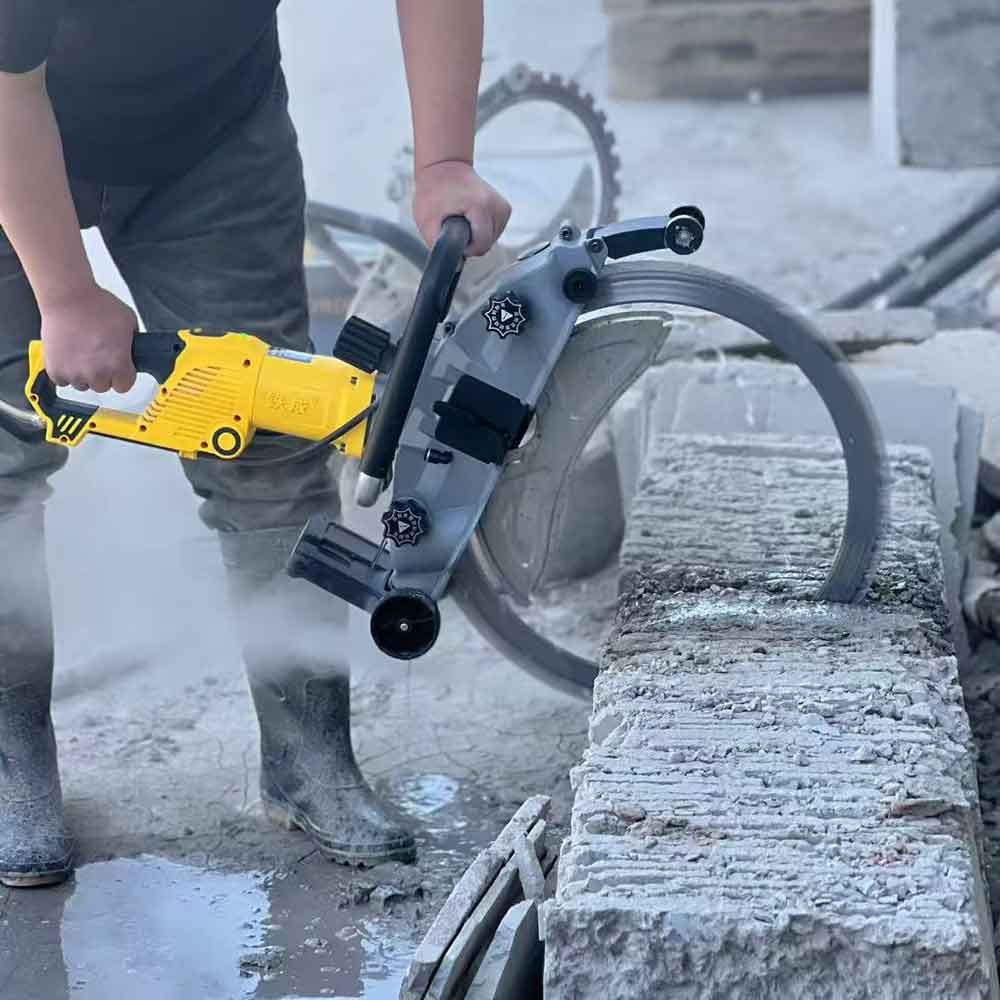
A ring saw is a handheld cutting tool that uses a ring-shaped blade rather than a standard center-mounted circular blade. It is mainly designed for cutting hard construction materials such as concrete, reinforced concrete, brick, block, and masonry. In some industries, ring saws are also associated with glass or tile work, but in construction and demolition, the term usually refers to a heavy-duty saw built for deeper cuts in structural materials.
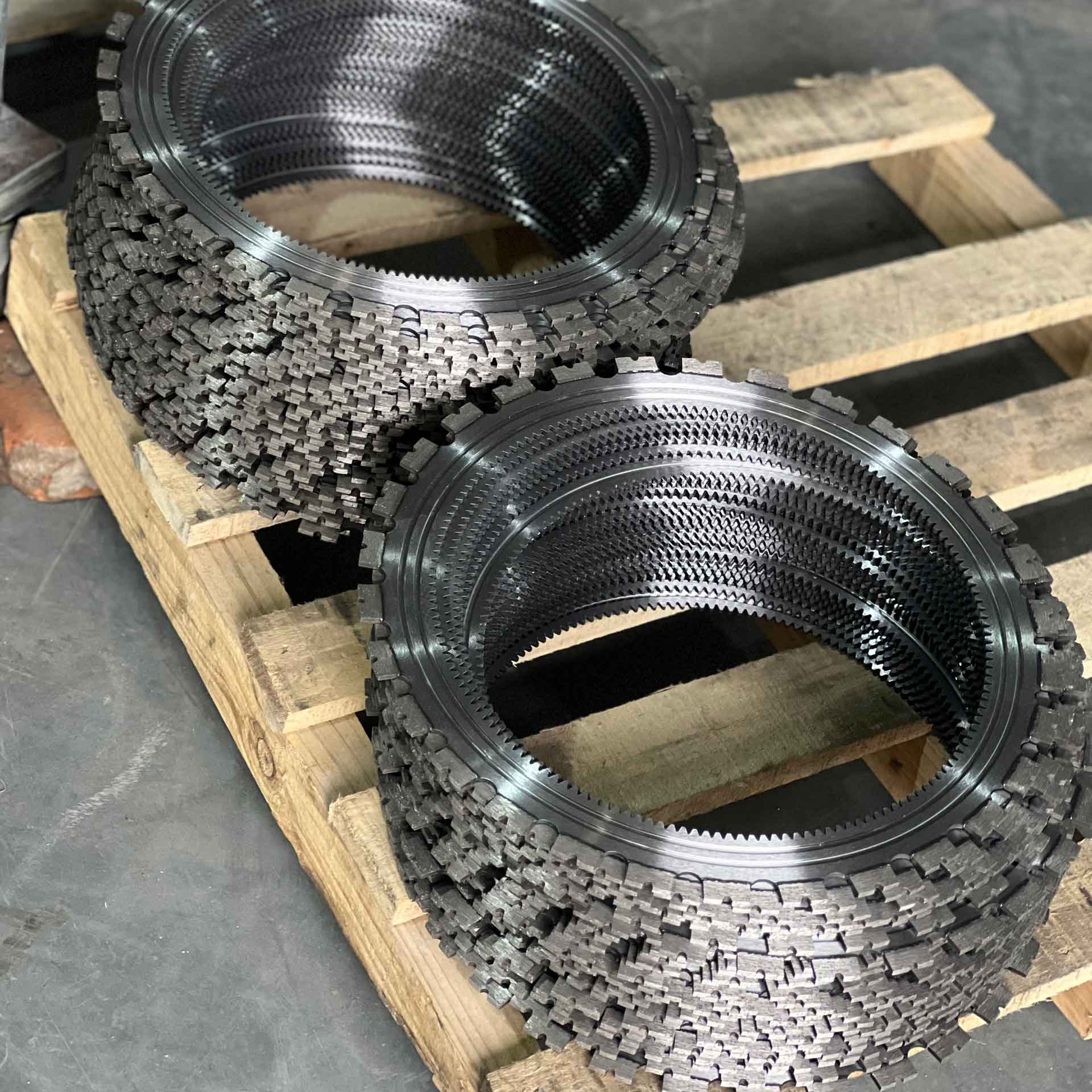
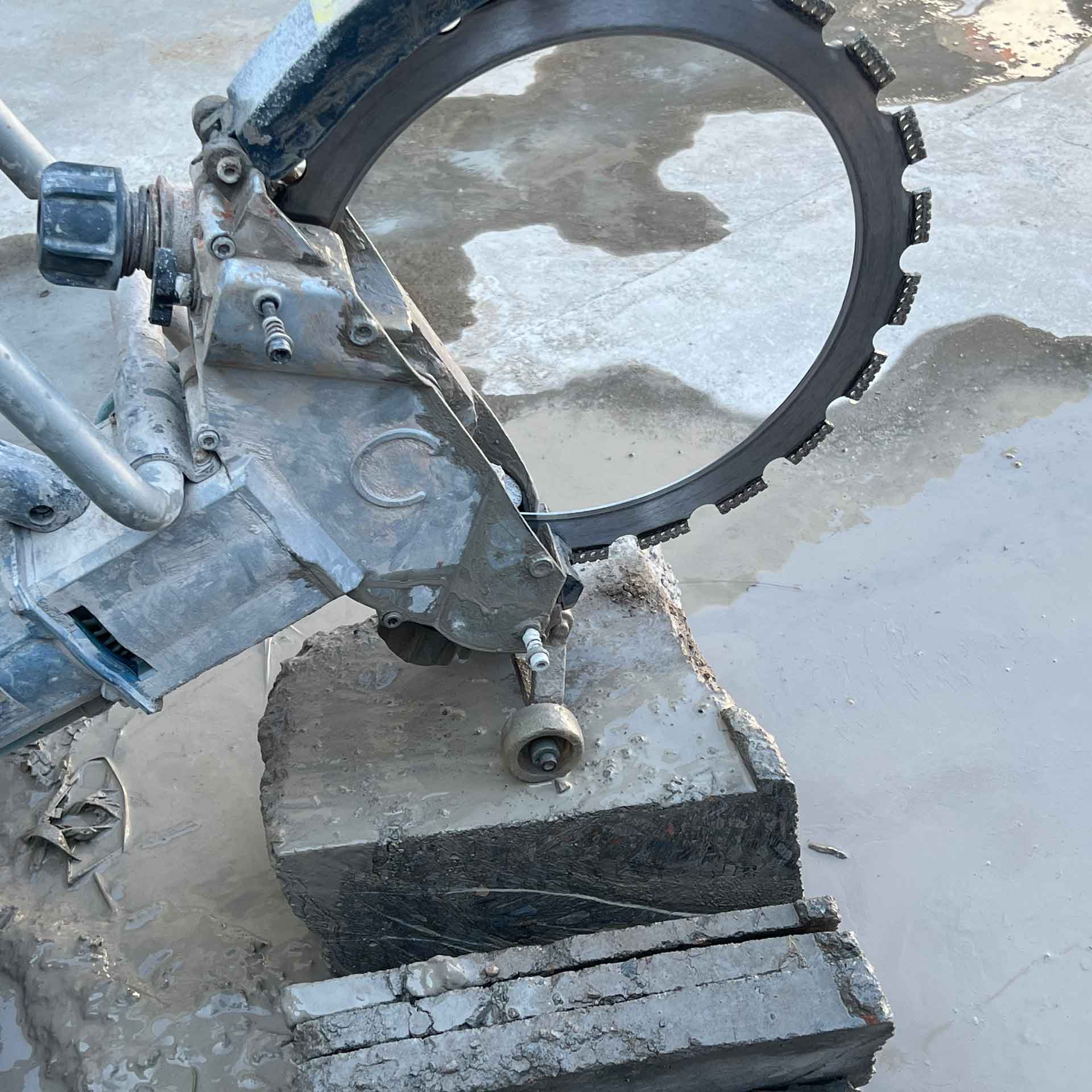
What makes a ring saw different is its blade design. On a standard circular saw, the blade rotates from a central arbor, and that center mounting limits how much of the blade can actually enter the material. A ring saw reduces that limitation by using a blade structure that is supported and driven around its outer edge. Because of this design, more of the blade can engage with the workpiece, allowing the tool to cut deeper than many conventional handheld saws of similar size.
In practical terms, a ring saw is often chosen for applications such as wall openings, door and window cuts, utility access cuts, renovation work, and controlled demolition. It is especially useful when users need a handheld machine with strong cutting ability but do not want to move to larger wall saw systems or floor saw equipment. For contractors who regularly work with masonry and concrete, a ring saw is not just another saw. It is a problem-solving tool for deep, controlled cutting in places where ordinary saws may struggle.
How Does a Ring Saw Work?
The working principle of a ring saw is easier to understand once you focus on its two core elements: the ring blade and the drive system. Instead of spinning a blade from the center like a regular circular saw, a ring saw transfers power to a blade that is supported and guided around its edge. This allows the blade to rotate while leaving more usable cutting area available.
The cutting action itself is produced by the diamond segments or abrasive cutting edge on the blade. When the motor powers the blade, those cutting segments grind into the material. Unlike woodworking saws that rely on sharp teeth to slice through soft material, a diamond ring saw cuts hard surfaces through abrasion. The blade gradually wears away the concrete, brick, or masonry as it moves through the cut. This is why blade quality, cooling, and proper operating pressure all matter so much.
Most construction ring saws are used with water. The water serves several important purposes at the same time. It cools the blade, reduces friction, helps remove slurry and debris from the cutting zone, and suppresses dust. Without proper cooling, blade overheating can shorten blade life, reduce cutting speed, and increase the chance of unstable cutting. In demanding applications, water is not just helpful. It is essential to efficient ring saw performance.
Another key part of the system is the guide and support mechanism. Because the blade is not mounted in the traditional way, the machine uses support components to keep the blade running in a stable path. When everything is set up correctly, the operator can guide the tool into the material with steady pressure and produce deep, controlled cuts. That is the real appeal of the ring saw: it combines portability with cutting depth in a way that few other handheld tools can match.
Main Components of a Ring Saw
To understand why a ring saw performs the way it does, it helps to break the tool down into its main parts. Each component contributes to cutting speed, stability, safety, and service life.
Ring Blade
The blade is the most important cutting element of the machine. A ring saw blade is usually equipped with diamond segments or another abrasive cutting edge suitable for hard materials. Blade quality directly affects speed, cut quality, service life, and operating efficiency. Some blades are optimized for concrete, while others are better suited for masonry, brick, or mixed materials.
Drive System
The drive system provides the power that rotates the blade. Depending on the machine, the saw may be powered by electricity, gasoline, or hydraulics. Each power type has its own advantages. Electric models are often useful indoors or where emissions are a concern. Gasoline-powered saws are popular for outdoor mobility. Hydraulic models are often chosen for specialized industrial or heavy-duty applications.
Guide Rollers and Support Parts
Because the blade is guided differently from a standard circular saw, support parts play a critical role in keeping the blade aligned. These components help stabilize the blade during rotation and cutting. If the support system is worn, poorly maintained, or damaged, cut quality may drop and blade wear may increase.
Water Supply System
Most ring saws used for concrete and masonry cutting rely on a water feed system. This system directs water to the cutting area to cool the blade and reduce dust. A poor or blocked water supply can quickly reduce cutting efficiency and create unnecessary wear.
Handles and Protective Guard
The handle design affects balance, control, and operator comfort. A well-designed saw helps the user apply steady cutting pressure without forcing the tool. The guard also plays a major role in protecting the user from debris, spray, and contact hazards.
When all of these components work together properly, the result is a tool capable of fast, deep, and controlled cutting in materials that are otherwise difficult to handle with handheld equipment.
What Is a Ring Saw Used For?
A ring saw is used for jobs that demand deep, accurate cuts in hard building materials. In many cases, it becomes the preferred tool when a regular handheld saw cannot reach the required depth or cannot work efficiently in the available space.
One of its most common uses is concrete cutting. Contractors often use a concrete ring saw when making wall openings, expansion cuts, repair cuts, or structural access cuts. The deeper cut depth is especially helpful when working on reinforced or thicker sections where standard handheld tools may leave too much unfinished material behind.
Another major application is brick and masonry work. In renovation and remodeling projects, crews may need to cut through block walls, brick structures, or mixed masonry assemblies to create new openings or remove damaged sections. A masonry ring saw offers the control needed for these jobs while still delivering enough depth to make the process efficient.
Ring saws are also frequently used for door and window openings. This is one of the clearest examples of where the tool adds value. When cutting an opening in a wall, deeper penetration reduces the amount of extra work needed from the opposite side or from additional tools. That can save time, improve alignment, and make the cutting process cleaner.
Other uses include pipe access work, utility openings, demolition preparation, renovation cuts, and confined-space cutting. In all of these cases, the saw is chosen not just because it cuts hard material, but because it does so with a depth and accessibility advantage that ordinary handheld saws often cannot provide.
Why Choose a Ring Saw Instead of a Standard Concrete Saw?
A standard concrete saw is useful for many cutting tasks, but it is not always the best choice for deep, vertical, or access-limited cuts. This is where a ring saw becomes attractive. Its biggest advantage is its ability to reach greater cutting depth while still remaining a handheld machine.
For example, when cutting into a wall to form a door or window opening, the deeper reach of a ring saw can reduce the need for repeated cutting from both sides. In some cases, that improves efficiency and helps keep the cut line more accurate. On renovation sites, where access may be limited by nearby structures or confined working conditions, a ring saw may also be easier to position than larger cutting equipment.
Another reason to choose a ring saw is job flexibility. A contractor may not always want to bring in a large wall saw or floor saw for medium-scale work. A handheld ring saw offers a balance between portability and capability. It is powerful enough for demanding tasks but still practical enough for mobile use.
That said, a ring saw is not automatically better in every situation. If the work involves long, open, straight cuts on slabs or floors, a larger dedicated saw may be faster and more economical. The best tool depends on the material, cut depth, job layout, and required finish quality. A ring saw stands out when depth, access, and handheld operation matter more than raw production speed in open areas.
Ring Saw vs Circular Saw
Although both tools use rotating blades, a ring saw and a standard circular saw are built for very different purposes. A circular saw is usually designed for more general cutting applications and is far more common across a wide range of industries. It is a versatile tool, but in construction masonry work, it does not automatically replace a ring saw.
The main difference is blade structure. A circular saw uses a standard center-mounted blade, which limits usable cutting depth because the blade must rotate around a central arbor. A ring saw uses a blade system that allows more of the blade to enter the workpiece. That means a ring saw can often achieve deeper cuts in hard materials such as concrete and brick.
There is also a difference in intended use. A circular saw may be excellent for wood, sheet material, light-duty cutting, or some general-purpose tasks. A ring saw is more specialized. It is designed for deep cut concrete saw applications, masonry openings, and harder construction materials. Its value lies in solving heavy-duty cutting problems rather than offering all-purpose versatility.
If a contractor only needs shallow cuts or general cutting flexibility, a circular saw may be the more practical choice. If the job requires deeper penetration in concrete or masonry, especially on walls or structural openings, the ring saw becomes the stronger option.
Ring Saw vs Concrete Chainsaw
A ring saw and a concrete chainsaw are often compared because both are used for deep cutting in concrete and masonry. They can serve similar markets, but they do not behave exactly the same way on the job.
A concrete chainsaw is often valued for its ability to start cuts in corners and handle certain opening shapes more easily. That can be useful when working with square openings or areas where corner completion matters. A ring saw, on the other hand, is often appreciated for its stability, straight-line cutting performance, and efficient deep cutting on many wall and structural jobs.
The choice between the two usually comes down to the geometry of the cut, the material, the required finish, and the operator’s familiarity with the tool. For some jobs, a ring saw offers a better balance of speed, depth, and control. For others, a concrete chainsaw may be the better fit because of its shape and access advantages.
Rather than asking which tool is universally better, professionals usually ask which tool is better for a specific task. A ring saw is often the stronger choice when the goal is deep, controlled cutting in concrete or masonry using a handheld machine with stable straight-cut performance.
Advantages of Using a Ring Saw
One of the biggest advantages of a ring saw is greater cutting depth. That is the feature that defines the tool and explains why it remains relevant on demanding construction jobs. Deeper cuts can reduce labor, improve efficiency, and make it easier to complete structural openings or thick-wall work.
Another advantage is its suitability for tight or restricted working areas. A ring saw remains a handheld machine, which means it is easier to move into renovation zones, partially enclosed spaces, or active jobsites where large cutting systems are not practical.
A ring saw is also highly effective for wall openings and vertical cuts. This makes it valuable for door openings, window openings, utility penetrations, and repair work in existing structures. For contractors who frequently modify concrete or masonry walls, this capability can save both time and effort.
In addition, the tool works very well with diamond blade systems, which offer strong performance in hard materials. With the right blade, a ring saw can produce efficient cutting results across concrete, block, brick, and other dense materials.
Finally, a ring saw offers a useful balance between portability and performance. It gives contractors a professional cutting solution without forcing them to rely only on larger stationary equipment. For many jobsite scenarios, that balance is exactly what makes the tool worth the investment.
Limitations of a Ring Saw
Despite its strengths, a ring saw also has limitations, and acknowledging them is important for making the right equipment decision. The first limitation is cost. Ring saws and their blades are often more expensive than simpler handheld cutting tools. For companies that only occasionally need deep cuts, that higher cost may be harder to justify.
Another limitation is maintenance. Because the system depends on blade support, cooling, and stable operation, it must be properly maintained. Worn parts, poor alignment, or cooling issues can affect cut quality and blade life. This means the tool rewards professional users who understand setup, inspection, and routine service.
Ring saws are also not ideal for every cutting scenario. On long slab cuts or large open horizontal surfaces, other saw types may be faster or more economical. A ring saw shines in specialized conditions, not necessarily in every production environment.
Blade selection is another factor. The wrong blade can lead to slow cutting, rapid wear, or unstable performance. Users need to match the blade to the material and cutting method. In short, a ring saw is a powerful tool, but it performs best when used for the right applications and supported with the right consumables and maintenance practices.
How to Use a Ring Saw Safely
Safe operation begins before the saw even touches the material. The operator should first inspect the machine, including the blade, support components, guard, and water feed system. Any sign of wear, looseness, blockage, or damage should be addressed before use.
Blade selection is also part of safety. Using the correct ring saw blade for the material helps the saw cut more smoothly and reduces unnecessary stress on both the operator and the machine. A mismatched blade can increase vibration, heat, and the chance of poor cut control.
During cutting, the operator should use steady pressure rather than forcing the tool into the workpiece. A ring saw is designed to cut through proper blade action and consistent contact, not through aggressive pushing. Excess force can reduce cut accuracy, overheat the blade, and increase wear.
Water supply should also be checked throughout the job. Wet cutting helps cool the blade and reduce dust exposure. In concrete and masonry work, dust control is not just a performance issue. It is also a health and safety issue.
Finally, personal protective equipment matters. Eye protection, hearing protection, gloves, protective footwear, and appropriate respiratory protection should all be considered depending on site conditions. A ring saw is a powerful handheld tool, and the safest results come from combining good equipment condition with correct operating habits.
How to Choose the Right Ring Saw
Choosing the right ring saw starts with understanding the material you plan to cut. Concrete, reinforced concrete, brick, block, and stone can place different demands on the machine and the blade. Some jobs are primarily about access, while others are about depth, frequency of use, or production demands.
Cutting depth is one of the first things to evaluate. If your work regularly involves thicker walls or deeper structural cuts, then depth capacity becomes a critical buying factor. The whole point of a ring saw is to offer more usable depth than many standard handheld saws, so it makes sense to choose a model that matches your actual project requirements.
Power source is another consideration. Electric saws may be suitable for indoor work or areas with strict emission requirements. Gasoline models can be practical for outdoor mobility. Hydraulic systems may suit specialized industrial environments. The best choice depends on where and how the saw will be used.
You should also think about jobsite conditions. Is the work indoors or outdoors? Is there easy access to water? Will the tool be used in confined areas? Is portability more important than long continuous operation? These questions help narrow the right equipment type.
Finally, do not overlook consumables and support. A ring saw is only as practical as the blades, spare parts, and service support available to you. Contractors often focus on the machine first, but long-term performance also depends on blade supply, maintenance access, and consistent product quality.
Ring Saw Blade Selection Tips
Blade choice has a direct impact on cutting speed, cost, and service life. Even a high-quality ring saw will underperform if the blade is not matched to the application. That is why understanding ring saw blade selection is just as important as choosing the machine itself.
The first rule is to match the blade to the material. Concrete, reinforced concrete, brick, block, and masonry can all behave differently during cutting. A blade designed for one material may not give the best balance of speed and life in another. If the material mix varies from job to job, users may need a more versatile blade specification.
The second rule is to consider workload. Some users only make occasional cuts, while others run the saw regularly on demanding sites. Higher-frequency use may justify a more premium blade because better cutting efficiency and longer life can reduce downtime and total operating cost.
Cooling conditions also matter. Many ring saws work best in wet cutting environments, and the blade should be selected with that in mind. Stable water supply supports blade life and performance. If water flow is inconsistent, even a good blade may wear too quickly.
Finally, users should know when to replace the blade. Slow cutting, poor cut quality, excess heat, and abnormal wear are all warning signs. Replacing a worn blade at the right time is often more cost-effective than trying to force extra life out of it and damaging productivity in the process.
Common Ring Saw Problems and How to Avoid Them
One common complaint is slow cutting speed. In many cases, this happens because the blade does not match the material, the blade is worn, or the operator is applying the wrong pressure. The solution is usually to check blade suitability, inspect wear, and let the saw cut at a steady pace instead of pushing too hard.
Another issue is blade overheating. This often results from poor water flow, continuous overload, or using the wrong cutting approach. Making sure the cooling system is working properly is one of the easiest ways to protect blade performance and machine reliability.
Some operators also experience uneven or wandering cuts. This can be caused by unstable handling, worn guide components, or poor starting technique. Good machine maintenance and correct operator control both play a role in cut quality.
Excessive blade wear is another avoidable problem. It is often linked to material mismatch, overheating, or prolonged use under poor cooling conditions. Choosing the correct blade and maintaining the saw properly are the best long-term solutions.
Most ring saw problems are not random. They usually come from a mismatch between tool, blade, material, and operating method. When those four factors are aligned, performance improves significantly.
Is a Ring Saw the Right Tool for Your Project?
A ring saw is the right tool when your project involves deep cutting in concrete, masonry, or brick and when handheld access still matters. It is especially useful for wall openings, renovation work, demolition preparation, utility cuts, and structural modifications where standard handheld saws cannot reach the required depth efficiently.
It is also a smart option when your worksite does not justify a larger wall saw or floor saw but still demands professional cutting results. In these cases, the ring saw fills an important gap between light-duty tools and large cutting systems.
However, if your jobs mostly involve shallow cuts, long open slab cuts, or general-purpose work, another saw type may be more economical. The best equipment choice should always reflect the actual task rather than the tool’s reputation alone.
For contractors and buyers working in concrete and masonry applications, the ring saw is often worth considering because it offers a specialized capability that solves real jobsite challenges. Its value becomes most obvious when depth, control, and portability all matter at the same time.
Frequently Asked Questions
What is the main purpose of a ring saw?
The main purpose of a ring saw is to make deep cuts in hard materials such as concrete, brick, block, and masonry while still using a handheld tool.
How does a ring saw differ from a regular saw?
A ring saw uses a ring-shaped blade system that allows greater usable cutting depth than many standard center-mounted blade designs.
Can a ring saw cut reinforced concrete?
Yes, a ring saw can cut reinforced concrete, but performance depends on machine power, blade quality, cooling, and the amount of reinforcement in the material.
Is a ring saw better than a circular saw?
It is better for certain deep-cut concrete and masonry applications, but not necessarily for every cutting task. The better tool depends on the material and job requirements.
Do ring saws need water?
Many ring saws perform best with water because water cools the blade, reduces dust, and helps improve blade life and cutting stability.
What materials can a ring saw cut?
Typical materials include concrete, reinforced concrete, brick, block, masonry, and some types of stone.
How do I choose the right ring saw blade?
Choose based on material type, cut depth, workload, cooling conditions, and the level of cutting performance you need.
Conclusion
A ring saw is a specialized cutting tool designed for users who need deeper cuts, better access in confined spaces, and dependable performance in concrete and masonry work. Its ring-shaped blade system allows it to solve cutting problems that many standard handheld saws cannot handle as efficiently. That is why it has become an important option for contractors, renovation crews, and demolition professionals working with structural materials.
Understanding what a ring saw is and how a ring saw works helps buyers and users make better decisions about equipment selection, blade choice, and jobsite planning. When matched with the right blade and used under proper conditions, a ring saw can deliver strong performance, practical portability, and real value on demanding projects.
If your work involves wall openings, deep masonry cuts, or controlled structural cutting, a ring saw may be one of the most useful tools to add to your equipment lineup.